
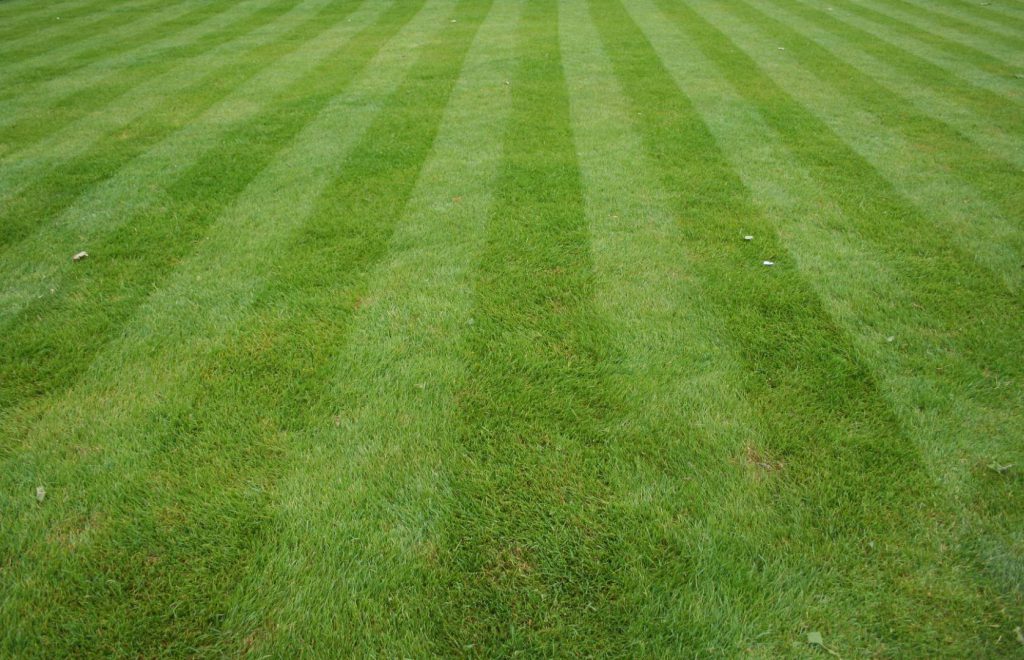
There is nothing quite like being able to show off your lush and bright green lawn. However, getting your lawn to be the envy of the neighborhood requires a dedicated lawn maintenance routine.
Simply put, lawn care is all about carrying out certain tasks, daily or weekly, to keep your lawn healthy. Alternatively, you could get the help of a lawn care or landscaping professional to handle all the work.
If you are interested in maintaining your lawn yourself, then the following tips are useful tips to keep your lawn healthy.
Add a Sprinkler to Your Lawn Maintenance Routine

You cannot get the best lawn in the neighborhood without adequately watering it. If you don’t have new grass seeds, you don’t have to water your lawn every day. Watering frequency depends on rainfall, soil, weather, and whether grass is established or newly seeded; there is no single perfect weekly schedule.
The most effective way to get the most out of your lawn maintenance routine is to use a sprinkler system. Your sprinkler system should cover the entire lawn. You should also stick to watering your lawn at the optimum time.
Watering your lawn between 6 and 10 AM in the morning can be the best way to ensure it can soak up all the water it requires. Watering your lawn at night or during the day might not yield the best results.
Use Fertilizer During Lawn Maintenance
There is a lot more to lawn care than simply cutting and watering it. You also have to give it the nutrients it needs to grow–and that means fertilizing. Fertilizer choice, rate, and timing should match the lawn and product instructions.
A lawn spreader and high-quality fertilizer are all you need to fertilize your lawn. Lawn spreaders come in two types: broadcast spreaders and drop spreaders.
- Choose a spreader suited to the area and calibrate it for the product being applied.
Follow the fertilizer label for application conditions and watering instructions. Measure the treatment area and calibrate the spreader; do not assume that watering several days beforehand is required for every product.
Use the recommended rate and spreader pattern, avoiding excess overlap. Keep fertilizer off pavement and out of drains. If you are unsure about a treatment, ask for a property-specific recommendation.
Do Some Landscaping

If your lawn is patchy, with several areas looking great while others need a bit more help, then you might have to do a bit of reseeding. Reseeding isn’t just for spots of bare ground, and it can be great for patches that are overgrown with weeds.
Identify weeds before deciding whether treatment is needed. If a herbicide is used, follow its label, including any waiting period before seeding. The next step is to select a hardy grass seed suited to your climate. Raking can prepare the surface for seed-to-soil contact; it is not a substitute for core aeration where compaction is a problem.
You then conduct the final step over a couple of weeks: spreading the seed with your spreader, fertilizing, and watering the soil. Follow seed-specific establishment and mowing instructions rather than a universal two-inch target.
Caring for Your Mower Is Also Lawn Maintenance
While you can water, fertilize, and aerate your lawn consistently, using the wrong tools can negate all that great work. Your lawnmower, or the state of it can make or mar your efforts. When it comes to landscaping, the lawnmower works the hardest.
To this end, you need to ensure your lawnmower blades are sharp. If you aren’t confident of sharpening the blades yourself, a professional sharpener can handle it. Great lawn care also means cleaning out your mower after every use.
The mower’s undercarriage can catch a lot of grass, stones, and other debris. Cleaning it out after every use can help prevent rust, ensuring it runs smoothly. Depending on your type of lawn mower, you can hire a professional to perform a yearly checkup on it. Before cleaning or maintenance, stop the equipment and follow the manufacturer’s instructions for preventing accidental starting.
Conclusion
These maintenance steps provide a starting point; results depend on weather, soil, grass condition, and follow-through. All you need is to water, fertilize, aerate your lawn, and care for your lawn mower. If your lawn is too far gone or you can’t handle the commitment, AR Lawn Service is happy to handle the heavy lifting for you. Give us a call today.