
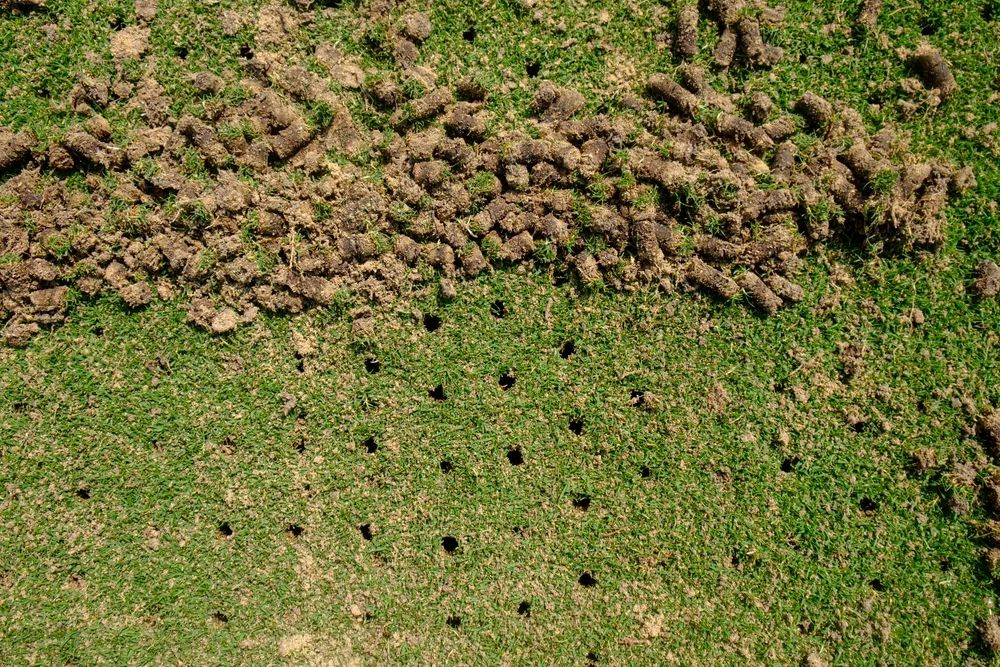
Many homeowners don’t understand how essential soil fertility is to landscaping and lawn maintenance. For a lawn, the practical questions are whether roots have suitable growing conditions and whether testing identifies a nutrient or pH issue.
While factors like nutrient content and pH levels are well-known contributors, the role of soil aeration is often overlooked. So, let’s look at the intricate relationship between aeration and fertility to examine how oxygen levels influence nutrient availability and plant health.

The Importance of Soil Aeration for Lawn Fertilization
Soil aeration refers to the presence of oxygen within the soil matrix. It’s vital for the survival and function of soil organisms, including beneficial microbes and plant roots. Adequate soil aeration ensures the exchange of gases between the soil and the atmosphere to facilitate essential processes like respiration and nutrient uptake by plant roots.
Conversely, poor soil aeration leads to oxygen deficiency. It can create anaerobic conditions detrimental to soil health and fertility. Meanwhile, these conditions can ruin your landscaping and gardens. After all, plants without oxygen will starve.
Impact of Aeration on Nutrient Availability
Oxygen availability plays a crucial role in regulating soil nutrient dynamics. In well-aerated lawns, microbial activity thrives. This activity decomposes organic matter to release nutrients in plant-available forms.
These nutrients, including nitrogen, phosphorus, and potassium, are essential for plant growth and development. Core aeration improves physical soil conditions; it does not supply fertilizer or establish that a lawn needs less nitrogen. Base nutrient decisions on the lawn’s condition and appropriate soil testing.
Poorly aerated soils are just the opposite. Microbial activity is suppressed, which leads to nutrient mobilization and reduced availability for plants. Curious about how the process works? Contact local lawn care professionals for more information.
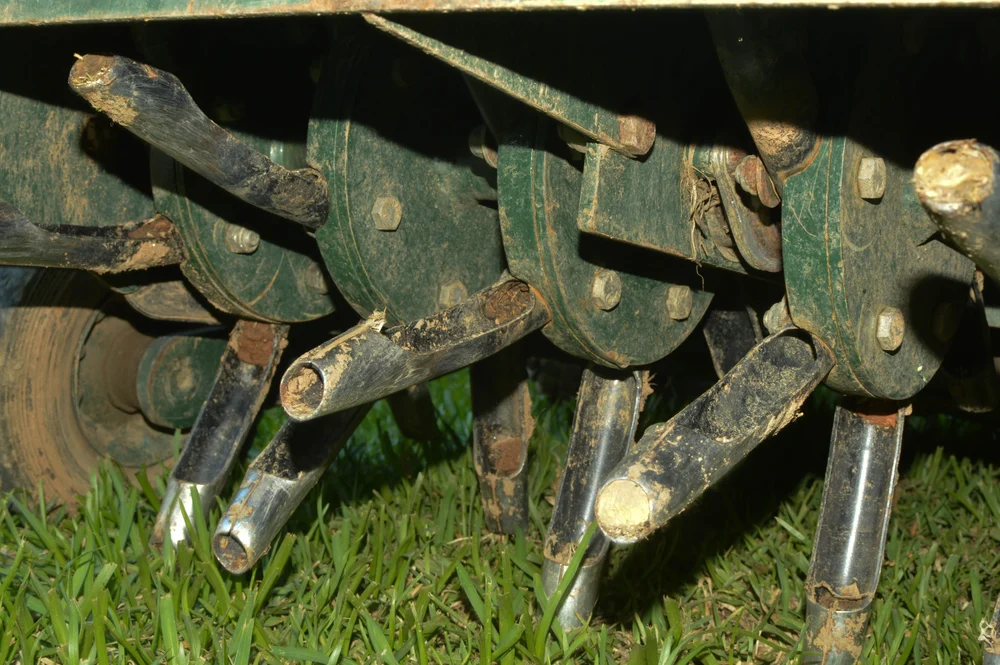
Enhancing Soil Fertility Through Aeration Services
Implementing strategies to improve soil aeration and fertility is paramount for enhancing your property and promoting sustainable landscaping. For established lawns, hollow-tine core aeration removes small plugs of soil to address compaction. It is different from deep tillage or crop-management practices.
Do not add amendments automatically. First identify whether the lawn needs compaction relief, a nutrient adjustment, or another kind of care. Discuss compaction, thatch, drainage, and planned overseeding with your provider; aeration is not a cure for every soil or drainage problem.
Conclusion
Soil aeration is crucial in supporting fertility and productivity. By understanding the intricate relationship between aeration and fertility, homeowners and businesses can enjoy proactive soil management strategies aimed at improving their properties.
Want to know more about how aeration can revolutionize your outdoor space? Request a property-specific aeration quote from A.R Lawn Service LLC.